 Sunlite Systems Pvt. Ltd.

Dell Distributor in India: Genuine Hardware, Verified Sourcing, Institutional-Scale Supply
When "Dell Distributor in India" Is the Search That Actually Matters
Anyone who has typed Dell distributor in India into a search bar is usually not shopping for a single laptop. They are an IT manager staring at a refresh cycle for forty workstations, a school administrator trying to equip a new computer lab before the academic session starts, a government procurement officer working through a GeM requirement, or a systems integrator who needs a dependable upstream partner before they can commit to a client deadline. The phrase itself signals scale, urgency, and a need for certainty — certainty that the hardware is genuine, that the invoicing will hold up to audit, and that there will be someone to call when a unit needs warranty service six months down the line. That is precisely the gap Sunlite Systems Pvt Ltd exists to close. Based in Ghaziabad, Uttar Pradesh, and registered as a vendor on the Government e-Marketplace (GeM), Sunlite Systems has built its business around exactly this kind of buyer: the one who needs Dell laptops, desktops, workstations, or servers in volume, delivered through a channel that can stand behind the transaction long after the invoice is settled.
The distinction between a distributor relationship and a one-off retail purchase is not cosmetic. A retail buyer accepts whatever configuration is on the shelf and whatever price is printed that day. An institutional buyer working with a distributor expects consistency across a batch of machines, predictable lead times, and a single point of accountability for an order that might span dozens or hundreds of units. When organizations search for a Dell distributor in India, what they are really evaluating is whether that distributor can behave like a partner rather than a shopfront — whether the same account team will be reachable next quarter, whether asset tags and serial numbers will be documented properly for internal IT inventory systems, and whether the paperwork will satisfy an internal audit or a government procurement review. Sunlite Systems positions itself squarely in that role, treating every enterprise, educational, or government order as the start of an ongoing relationship rather than a single transaction.
Why Authorized Sourcing Matters More With Enterprise IT Hardware Than With Almost Anything Else
IT hardware occupies a strange position in the electronics world: it looks like a commodity from the outside, but the risk of buying it through the wrong channel is unusually high. A laptop or desktop that is not sourced through an authorized channel can arrive with a warranty that was never registered correctly, with regional firmware mismatches, or — worse — as grey-market stock that was never intended for sale in the Indian market at all. For an individual consumer, this might mean an inconvenient service experience. For an enterprise IT department, it can mean dozens of machines that cannot be serviced under standard warranty terms, creating a support headache that outlasts whatever savings looked attractive at the time of purchase. This is the single biggest reason procurement teams specifically search for an authorized Dell distributor in India rather than simply searching for "cheap Dell laptops" — they already understand that the channel matters as much as the price.
Authorized sourcing also has a compliance dimension that becomes unavoidable the moment an organization is subject to any kind of financial or statutory audit. Government departments, PSU-adjacent bodies, and larger private enterprises all need GST-compliant invoicing, proper HSN classification, and documentation that traces each asset back to a legitimate supply chain. Educational institutions applying for grants or working with state education departments face similar scrutiny. A distributor that cannot produce clean, verifiable paperwork creates a liability that outlives the hardware itself. Sunlite Systems structures every institutional sale — whether it flows through a GeM tender, a direct B2B agreement, or a bulk order placed via the Sunlite Systems Online Store — with this compliance reality in mind, because the company itself operates as a GeM-registered vendor and understands what government and institutional buyers are required to produce internally.
What Working With a Dell Distributor in India Actually Looks Like in Practice
The mechanics of a genuine distributor relationship differ meaningfully from a retail purchase, and understanding those mechanics helps a buyer evaluate whether a supplier is actually equipped to serve them. It typically starts with a requirement conversation rather than a catalogue browse: how many units, what configuration tier (entry laptops for administrative staff versus workstation-class machines for design or engineering teams versus servers for a data center refresh), what the delivery timeline looks like, and whether the order needs to be staggered across multiple locations or delivered as a single consolidated shipment. A distributor worth working with will ask these questions before quoting a number, because the answer changes everything from lead time to logistics planning.
Bulk IT hardware orders also carry their own logistics reality that a single-unit retail purchase never has to confront. Dozens or hundreds of laptops or desktops need to be packed, tracked, and delivered in a way that survives transit without damage, often to a single institutional address rather than scattered individual homes. Asset tagging, serialization records, and delivery documentation need to be prepared in a form that an IT asset management system or a government stores register can actually ingest. When machines arrive faulty or a unit needs replacement under warranty, the process needs a clear escalation path rather than a generic customer-service queue. This operational layer — invisible to a retail buyer, essential to an institutional one — is what separates a distributor from a shop that happens to stock Dell products, and it is the layer where Sunlite Systems has deliberately built its capability, treating every enterprise and government order with the documentation discipline that institutional buyers require.
There is also a verification step that serious buyers increasingly insist on before placing a large order: confirming that the supplier is genuinely positioned within the authorized channel rather than simply reselling stock of unclear origin. This is a reasonable and healthy instinct for any procurement team to have, and a distributor that welcomes the question — rather than deflecting it — is generally the safer one to work with. Buyers evaluating any potential partner in this space, Sunlite Systems included, should feel comfortable asking directly about sourcing, warranty registration processes, and how service escalations are handled, because a supplier confident in its own channel will answer plainly.
Sector-Specific Realities: Enterprise, Education, and Government Deployments
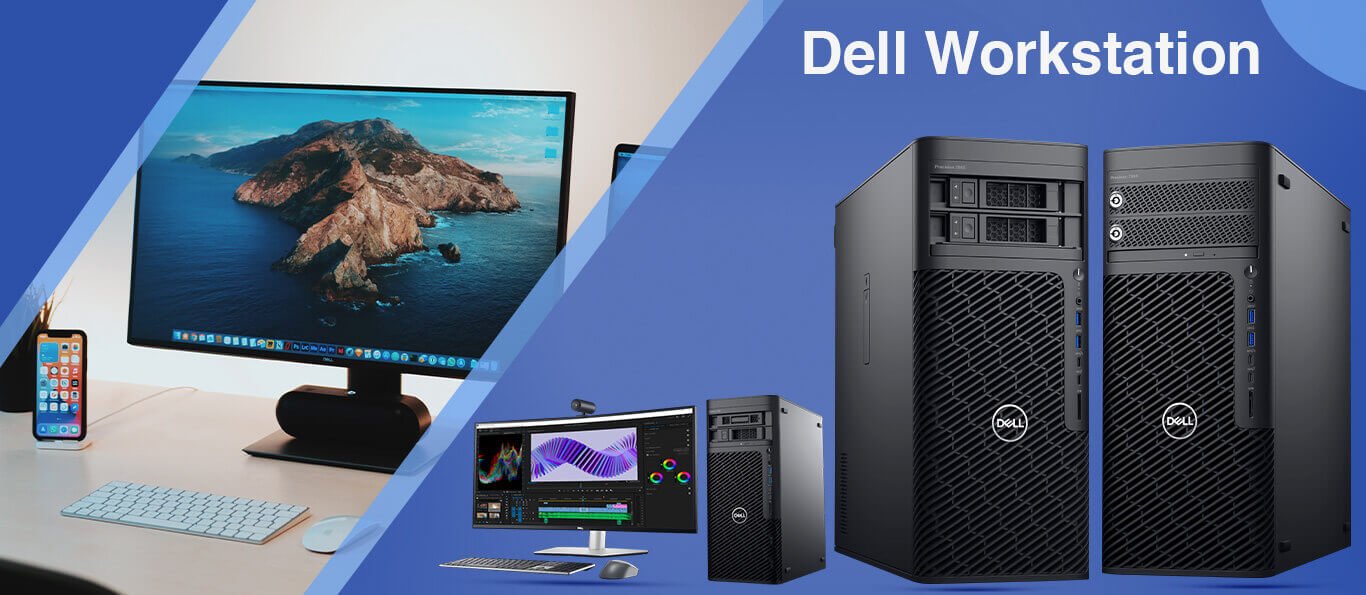
Corporate offices represent one of the most consistent demand patterns for Dell hardware in bulk, typically driven by refresh cycles rather than growth alone — a fleet of desktops or laptops reaching the end of a standard depreciation window and needing wholesale replacement rather than piecemeal repair. In this context, the priority is usually configuration consistency: IT teams want every machine in a batch to carry the same specification so that software imaging, driver management, and helpdesk troubleshooting stay simple across the fleet. Workstation-class Dell hardware also serves a narrower but important corporate segment — design, engineering, and data-intensive teams that need more processing and graphics headroom than a standard office laptop provides, and server hardware underpins the on-premises infrastructure that many mid-sized enterprises still maintain alongside cloud workloads.
Educational institutions bring a different rhythm to bulk Dell procurement, often tied to academic-year timing and computer-lab buildouts rather than continuous refresh. Schools, colleges, and training institutes need desktops and laptops that can survive heavier daily use across multiple student shifts, and procurement decisions here are frequently influenced by budget cycles that run through state education departments or institutional trusts. Anyone managing this kind of purchase benefits from working with a supplier who understands academic timelines and can commit to delivery before a term begins rather than after it has already started — a scheduling discipline that matters more in education than almost any other sector, because a delayed lab buildout affects an entire cohort of students rather than a handful of employees.
Government and GeM-routed deployments carry their own procedural weight, discussed in more detail below, but it is worth noting here that government buyers frequently need Dell desktops and laptops for office administration alongside server hardware for departmental data infrastructure, and the specification requirements in a government tender are often more rigid and less negotiable than in a private enterprise deal. A distributor accustomed to GeM's documentation and delivery expectations is generally better positioned to serve this segment without the friction that a purely retail-oriented supplier would introduce. Readers evaluating broader institutional AV and IT sourcing across brands may also find it useful to look at how the same procurement logic applies to office collaboration hardware, discussed further in our Kramer distributor page, since many organizations bundle IT hardware refreshes with boardroom AV upgrades in the same budget cycle.
The GeM and Institutional Procurement Angle
The Government e-Marketplace has become the default channel through which central and state government departments, PSUs, and a wide range of autonomous bodies procure IT hardware, and this has real implications for how a Dell distributor in India needs to operate. GeM listings require vendors to maintain registration, comply with the platform's documentation standards, and be prepared to deliver against tender timelines that are often tighter and less flexible than a typical private-sector purchase order. Sunlite Systems' own status as a GeM-registered vendor means the company is built to operate inside this framework rather than treating it as an occasional add-on to a primarily retail business — a distinction that matters to any government buyer trying to identify a supplier who will not stumble over the platform's procedural requirements.
Institutional buyers outside strict government channels — larger private enterprises, hospital groups, manufacturing units, and hospitality chains — increasingly apply GeM-like rigor to their own internal procurement even when they are not required to use the platform itself, because the discipline it enforces (clear specifications, documented delivery timelines, traceable invoicing) simply produces better outcomes. A distributor that has internalized this discipline through genuine GeM participation tends to carry the same rigor into private B2B deals, which is one of the quieter advantages of working with a supplier whose institutional muscle was built on government-grade requirements rather than assembled only for a single large private client.
How Sunlite Systems Supports This Specific Relationship
Sunlite Systems approaches Dell distribution across three channels that map onto the different ways institutional buyers actually procure: GeM tenders for government and PSU-adjacent buyers, direct B2B engagement for corporate, educational, and healthcare clients who prefer a negotiated purchase-order relationship, and the Sunlite Systems Online Store for buyers who want the transparency of an online catalogue while still being able to place bulk or repeat orders with institutional terms. This multi-channel structure exists because institutional buyers do not all procure the same way, and a distributor that only offers one path — only a tender process, or only a walk-in retail experience — ends up excluding a large share of legitimate demand.

Beyond the transaction itself, the company's positioning as a genuine electronics and IT dealer rather than a narrow single-brand reseller means a buyer working through a Dell hardware refresh can also address adjacent needs — projectors for the same meeting rooms the new laptops will be used in, or AV switching for a boardroom being upgraded alongside the IT fleet — through the same relationship rather than juggling multiple vendors for what is effectively one office-modernization project. This breadth is a deliberate part of how Sunlite Systems Pvt Ltd is structured, and it reflects a broader philosophy documented on Sunlite Systems Pvt Ltd's own site: that institutional buyers are better served by a supplier who can think across categories rather than one confined to a single product line.
Distributor vs. Retailer vs. Direct-from-OEM: A Decision Framework
Buyers weighing where to source bulk Dell hardware usually have three broad paths available, and each carries trade-offs worth naming plainly. Buying direct from the OEM's own institutional channel can work well for very large enterprises with dedicated procurement teams and long lead times, but it often lacks the local, hands-on responsiveness that a mid-sized organization needs when something goes wrong on a Tuesday afternoon. Buying through generic retail — even in bulk — exposes a buyer to the invoicing and warranty-registration risks described earlier, since retail channels are not built around institutional documentation needs. A dedicated regional distributor sits between these two options: close enough to be responsive, structured enough to handle institutional paperwork, and typically more flexible on order size than an OEM's own large-enterprise channel, which often has high minimum thresholds that exclude schools, clinics, and mid-sized offices.
The right choice ultimately depends on order size, delivery urgency, and how much internal procurement infrastructure the buying organization already has. A large multinational with its own dedicated IT procurement function may be well served going direct. A school, a mid-sized manufacturer, a hospital, or a government department working through GeM is usually better served by a distributor who can combine responsiveness with institutional-grade documentation — which is the segment Sunlite Systems is built to serve, and the same logic that guides many buyers toward pairing IT hardware sourcing with an HP wholesale supplier relationship when an organization runs a mixed fleet across both brands rather than standardizing on one.
Frequently Asked Questions
Does Sunlite Systems supply Dell laptops, desktops, workstations, and servers, or only one category?
Sunlite Systems supplies across all four categories — laptops, desktops, workstations, and servers — because institutional buyers rarely need just one. A single organization's IT refresh often includes administrative laptops, desktop fleets for fixed workstations, higher-spec machines for design or engineering teams, and server hardware for on-premises infrastructure, all within the same procurement cycle.
Can government departments procure Dell hardware from Sunlite Systems through GeM?
Yes. Sunlite Systems is a registered GeM vendor, which means government departments, PSUs, and other GeM-eligible institutional buyers can route Dell hardware procurement through the platform rather than negotiating a separate off-platform arrangement.
What is the minimum order size for a bulk Dell purchase?
Order size requirements vary by configuration and delivery timeline rather than a fixed universal minimum, since a ten-unit school lab order and a two-hundred-unit corporate refresh both count as legitimate bulk business. The most reliable approach is to raise the requirement directly through the contact page so it can be scoped against actual availability and delivery timeline.
How is warranty and after-sales service handled on bulk orders?
Because Sunlite Systems sources through authorized channels, machines carry warranty coverage that is properly registered rather than informally attached, and the company remains the point of contact for service escalation rather than leaving the buyer to navigate a generic OEM support line alone for institutional-scale deployments.
Can a school or small business place an order without going through GeM?
Absolutely. GeM is one of three channels Sunlite Systems operates through — direct B2B/institutional sales and the Sunlite Systems Online Store are equally available for buyers who are not government entities or who simply prefer a direct commercial relationship.
Bringing It Together
Searching for a Dell distributor in India is, at its core, a search for certainty in a purchase that will affect an organization's daily operations for years rather than months. Sunlite Systems Pvt Ltd has structured its Dell distribution business around exactly that need — genuine, authorized sourcing; documentation that satisfies audit and GeM requirements; delivery logistics built for bulk institutional orders rather than single-unit retail; and a multi-channel model spanning GeM tenders, direct B2B sales, and the Sunlite Systems Online Store so that government departments, schools, hospitals, corporates, and manufacturers can all procure through the path that suits them. For organizations exploring a wider technology refresh that touches presentation and collaboration hardware as well as core IT, it is worth browsing what Sunlite Systems India and its sister storefronts offer alongside Dell distribution, since many institutional buyers ultimately consolidate several category needs — IT, projection, and AV — into a single trusted supplier relationship rather than managing them separately.
Common Mistakes Buyers Make When Sourcing Bulk Dell Hardware
Even experienced procurement teams make avoidable errors when placing a large Dell order, and most of these mistakes trace back to treating a bulk purchase like a scaled-up version of a single-unit buy rather than a distinct process with its own risks. One of the most frequent errors is locking in a specification before confirming actual delivery timelines, which leaves an IT team committed to a configuration that may need to be revised if lead times slip — a problem that is far more disruptive across two hundred units than across one. Another common mistake is ordering configuration tiers based on department titles rather than actual workload: assuming every "manager" needs a higher-spec machine while every "executive" gets an entry-level one, when the real determining factor should be the software and workload each person actually runs day to day.
A third recurring mistake is failing to plan for asset documentation before the machines arrive rather than after. Buyers who wait until delivery to figure out how serial numbers, invoices, and warranty registrations will be reconciled against their internal asset register often end up with a paperwork backlog that takes weeks to sort out, precisely when the new hardware should already be in productive use. A related mistake is not confirming in advance how staggered delivery across multiple sites will be sequenced, which can leave one office fully equipped while another waits weeks for its share of the same order. Raising these questions directly with a Dell distributor in India before an order is finalized, rather than after machines are already in transit, is the simplest way to avoid all four of these pitfalls.
A Practical Buyer Checklist Before Placing a Bulk Dell Order
A short checklist, worked through before a purchase order is signed, removes most of the risk described above. Buyers evaluating a distributor or preparing an internal requisition should confirm the following:
- Exact unit counts by configuration tier (entry laptop, standard desktop, workstation-class, server), matched to actual workload rather than job title alone.
- A firm delivery date or delivery window, with an understanding of what happens if that window slips.
- Whether delivery needs to be staggered across sites or consolidated to one location, and in what sequence.
- How warranty registration and serial-number documentation will be handed over in a format the internal IT asset system can use directly.
- Whether GST-compliant invoicing and any GeM-specific documentation will be provided without a separate follow-up request.
- A named point of contact for post-delivery service escalation, rather than a generic support address.
- Whether extended warranty or annual maintenance contract options are available at the time of order, since these are usually cheaper to add upfront than to negotiate later once standard warranty coverage is already running.
Working through this list with a prospective supplier before committing to an order is a fast way to distinguish a distributor genuinely equipped for institutional-scale Dell procurement from one that is simply extending a retail process to a larger quantity.
Budget Planning for a Multi-Year Dell Refresh Cycle
Institutional buyers rarely purchase Dell hardware once and stop; laptops, desktops, and workstations move through a refresh cycle that typically runs several years, and budgeting for that full cycle — rather than just the initial purchase — avoids unpleasant surprises later. The most important planning input is deciding refresh timing in advance rather than reacting to failures: a fleet replaced on a predictable, staggered schedule is considerably easier to budget for than one where machines are replaced individually as they fail, since the latter creates unpredictable, piecemeal spending rather than a plannable annual or biennial capital line.
It is also worth planning for the fact that not every category in a fleet needs replacing on the same timeline — workstation-class machines used for design or engineering work often justify a longer service life with mid-cycle component upgrades, while standard administrative laptops may need replacing on a tighter schedule simply due to heavier daily handling. Institutions that plan their budget around these different sub-cycles, rather than treating the entire fleet as one undifferentiated pool, tend to spread capital spending more evenly year to year instead of facing one very large replacement bill every few years.
A refresh budget should also account for what happens to the outgoing fleet, since responsible disposal of old laptops, desktops, and servers has its own cost and compliance dimension that is easy to overlook when the focus is entirely on the new purchase.
Frequently Asked Questions
What information should be ready before requesting a bulk Dell quote?
Having unit counts by configuration tier, a target delivery window, and clarity on whether the order needs staggered delivery across sites makes it possible to receive an accurate quote on the first pass rather than several rounds of back-and-forth revision.
How far in advance should a multi-year Dell refresh be planned?
Most institutions benefit from mapping out refresh timing at least one full cycle ahead, since staggering replacement across the fleet by category rather than replacing everything at once spreads both budget impact and delivery logistics more evenly.
