 Sunlite Systems Pvt. Ltd.




Sennheiser Ceiling Mic Setup Services for Auditoriums, Halls and Large Meeting Rooms
What Ceiling Microphone Setup Services Actually Involve
Ceiling-mounted microphone systems solve a specific problem that tabletop or handheld microphones cannot — consistent audio pickup across a large room without visible hardware cluttering the table or requiring speakers to hold a microphone. Sennheiser ceiling mic setup services cover the full process of designing and installing an overhead microphone array that captures clear audio from every seat in a room, whether that room is a large boardroom, an auditorium, or a multi-purpose hall used for both formal meetings and public events.
The scope of this work goes well beyond fixing a microphone unit to the ceiling. It starts with acoustic and coverage planning — mapping out where speakers or attendees are likely to sit or stand, and how many microphone units and what array configuration are needed to cover that area evenly. It continues through structural assessment of the ceiling itself, since ceiling microphones need secure, vibration-free mounting and often need to be routed with cabling above a false ceiling to remain visually unobtrusive. Signal processing configuration follows, including gain settings, feedback suppression and, in larger rooms, integration with a public address or recording system. The process concludes with structured testing across the full room and a handover to whoever manages the room's audio system day to day.
Because ceiling microphones are usually installed once and rarely revisited — unlike a tabletop unit that can be repositioned easily — getting the coverage planning and installation right the first time matters more here than in almost any other AV installation category.
Understanding Sennheiser's Microphone Range in This Context
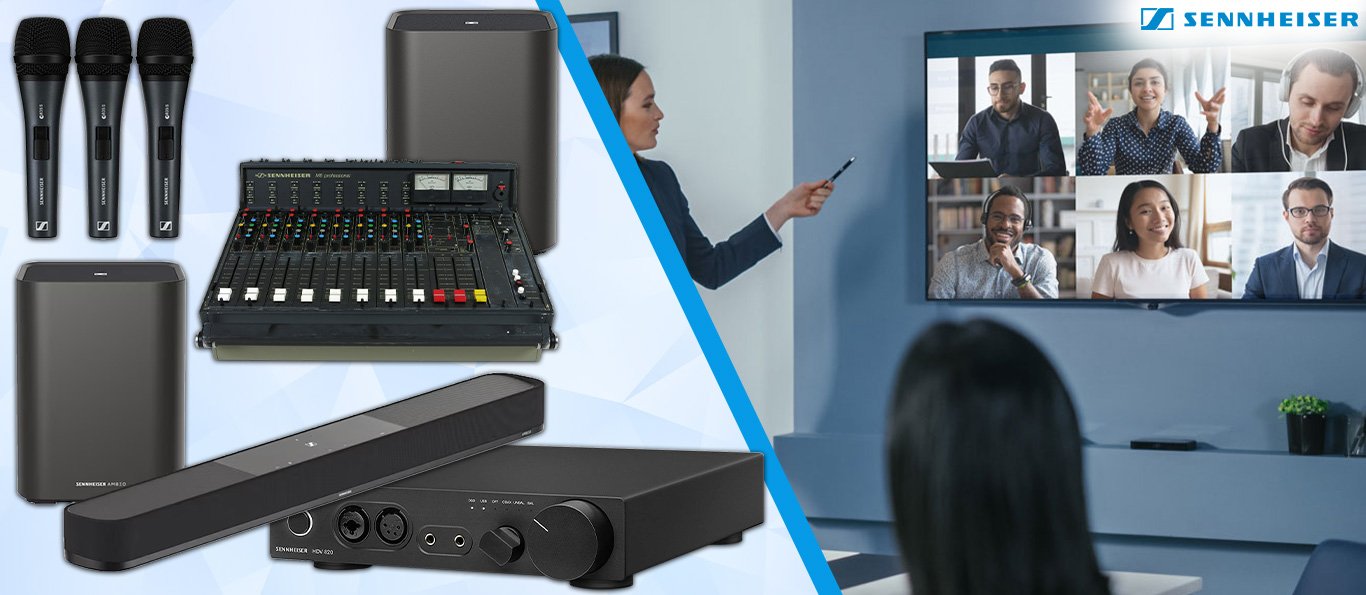
Sennheiser's microphone portfolio spans wired and wireless microphones, wireless microphone systems for presenters and panelists, and headsets, in addition to ceiling-mount arrays. Ceiling microphones are typically the right choice for rooms where a clean, hardware-free table or stage is important — boardrooms hosting formal meetings, auditoriums where a cluttered stage would look unprofessional, or multi-purpose halls where furniture and seating arrangements change between events and a fixed tabletop microphone setup would not adapt well.
In many installations, ceiling microphones are combined with other Sennheiser products rather than used in isolation — a wireless handheld or lapel microphone for a keynote speaker or presenter working the room, alongside a ceiling array covering audience questions or panel discussion from fixed seating. Understanding this combination is important when planning an installation, since a room that will host both formal panel discussions and open floor Q&A sessions needs a different microphone strategy than one used purely for seated boardroom meetings.
How to Choose the Right Installer for Ceiling Microphone Systems
Ceiling microphone installation requires a different skill set from standard AV work, combining acoustic design judgement with the practical ability to work above false ceilings and coordinate with a room's existing electrical and structural elements. When evaluating an installer, ask specifically about their experience with acoustic coverage planning — a competent installer should be able to explain how they determine the number and placement of microphone units for a given room shape and size, rather than simply installing a fixed number regardless of room dimensions.
Ask about their approach to testing coverage after installation. Because ceiling microphones cannot easily be repositioned once fixed, the installer should conduct thorough testing from multiple points in the room — not just the centre of the table or stage — before considering the job complete. It is also worth asking whether the installer accounts for the room's other acoustic characteristics, such as HVAC noise from ceiling vents located near microphone positions, since ceiling units are physically closer to these noise sources than tabletop alternatives.
Finally, given that these installations often require working above false ceilings and coordinating with the room's electrical infrastructure, confirm the installer has experience managing this kind of physical work safely and can coordinate with building facilities teams where required, particularly in older buildings with less accessible ceiling voids.
Site Preparation and Planning Before Installation
Ceiling microphone projects benefit from early structural assessment of the false ceiling or roof structure to confirm mounting points are available and can support the microphone units securely. Electrical and signal cabling routes above the ceiling need to be planned in advance, particularly in buildings where the ceiling void is shared with other services like HVAC ducting or lighting circuits, since routes need to avoid interference and remain accessible for future maintenance.
Room usage patterns should be mapped out clearly at the planning stage — how many people typically attend, whether seating is fixed or flexible, and whether the room hosts formal seated meetings, larger public events, or both. This directly determines microphone array configuration and coverage planning. Existing audio infrastructure, such as a public address system or recording setup, should also be identified early so the new ceiling microphones can be integrated rather than operating as a disconnected addition to the room's overall audio setup.
Noise sources within the room, particularly ceiling-mounted HVAC vents or lighting fixtures with audible hum, should be identified during planning so microphone placement can avoid or minimise interference from these sources rather than discovering the problem only after installation.
What to Expect During Installation — Step by Step
Installation typically begins with accessing the ceiling void to confirm structural mounting points match what was identified during the site survey, followed by running cabling along the planned routes above the false ceiling. Microphone units are then fixed at their designated positions, with particular care taken to secure them against vibration and to route cabling neatly to avoid strain on connectors.
Once physically installed, the system is connected to its processing unit, and gain levels are configured for each microphone zone based on the room's dimensions and expected speaker distance from the ceiling. Feedback suppression settings are tuned next, particularly important in rooms that also have a public address or amplified sound system, since ceiling microphones sitting close to speakers are more susceptible to feedback if gain structure is not carefully managed.
Testing follows, involving speech from multiple points across the room — not just a single test position — to confirm even pickup across the full coverage area, along with checks for any residual feedback or unwanted noise pickup from HVAC or lighting sources. The installation concludes with a handover to the room's audio operator or facilities team, covering how to adjust levels for different event types and who to contact if an issue arises.
Common Installation Mistakes to Avoid
- Installing a fixed number of microphone units regardless of room size, leaving gaps in coverage in larger rooms or unnecessary redundancy in smaller ones.
- Positioning microphones too close to HVAC vents or noisy lighting fixtures, resulting in persistent background noise that is difficult to correct afterwards.
- Failing to test coverage from multiple points in the room, only discovering dead zones once the room is in actual use during an event.
- Overlooking feedback risk in rooms with an existing public address system, leading to audible feedback during live events.
- Routing cabling without considering future maintenance access, making it difficult to service the system without significant disruption later.
- Treating the ceiling microphone system in isolation without integrating it with existing recording or amplification infrastructure already in the room.
A Sector Scenario — An Institutional Auditorium Used for Mixed Events
An educational institution's auditorium was used for a wide range of events — formal convocations, guest lectures, panel discussions and occasional public programmes — but relied on a small number of handheld and lapel microphones that needed to be physically passed between speakers, causing frequent delays and awkward handoffs during panel discussions and audience question segments. The institution wanted a solution that would provide clean audio pickup across the stage and the first several rows of seating without requiring speakers to manage handheld equipment constantly.
A site survey identified the auditorium's false ceiling as suitable for mounting a ceiling microphone array, with coverage planning mapping out zones across the stage and the audience seating area closest to it, where panel discussions and audience questions typically originated. Cabling was routed through the existing ceiling void in coordination with the institution's facilities team, avoiding HVAC ducting identified during planning. The installed system was paired with a wireless lapel microphone for keynote speakers, giving the auditorium a combined solution — clean overhead pickup for panel and audience interaction, alongside a dedicated microphone for formal presentations. Testing across multiple seating positions confirmed even coverage before the system was handed over to the institution's events team, along with guidance on adjusting settings for different event formats.
The GeM and Institutional Procurement Angle
Auditoriums, seminar halls and large meeting spaces in government buildings, educational institutions and public sector campuses frequently require professional audio upgrades procured through Government e-Marketplace tenders, and ceiling microphone systems are increasingly specified for these spaces given their clean, unobtrusive design suited to formal institutional events. These tenders often require installation and commissioning to be included within the same scope as hardware supply, along with acoustic coverage planning appropriate to the specific hall's dimensions.
As a GeM-registered vendor, Sunlite Systems Pvt Ltd supports government and institutional buyers with complete ceiling microphone projects — from coverage planning and tender-compliant hardware supply through to installation, calibration and testing — for auditoriums and halls used for institutional events, convocations and public programmes.

Frequently Asked Questions
How many ceiling microphone units does a typical auditorium need?
This depends entirely on the room's dimensions, ceiling height and seating layout, and should be determined through a proper acoustic coverage plan during the site survey rather than a fixed formula applied uniformly across different rooms.
Can ceiling microphones be installed in buildings with an existing false ceiling?
Yes, most existing false ceilings can accommodate ceiling microphone installation, provided a structural assessment confirms adequate mounting points and cable routing access above the ceiling.
Do ceiling microphones work alongside handheld or wireless microphones?
Yes, many installations combine a ceiling array for general room or panel coverage with a wireless handheld or lapel microphone for a specific presenter, giving flexibility across different event formats within the same room.
What causes feedback issues in ceiling microphone installations?
Feedback risk typically arises when microphone gain is not carefully balanced against nearby speaker output, particularly in rooms with an amplified public address system. Proper gain structuring and testing during installation should minimise this risk.
Can institutions procure ceiling microphone systems through GeM tenders?
Yes, ceiling microphone systems for auditoriums and halls are commonly specified in GeM tenders for government and educational institutions, and a GeM-registered vendor can supply, plan, install and commission the system against tender requirements.
In Summary
Ceiling microphone systems solve the coverage and aesthetics problem that tabletop and handheld microphones cannot, but because they are difficult to reposition after installation, getting the coverage planning and testing right the first time is critical. Proper Sennheiser ceiling mic setup services combine acoustic design judgement with careful structural installation, thorough multi-point testing, and integration with any existing audio infrastructure in the room — whether that room is a corporate boardroom, an institutional auditorium, or a multi-purpose hall procured through a government tender.
Institutions upgrading both audio and display infrastructure together may also find our Samsung digital display solutions relevant for the same auditorium or hall projects, and organisations building out classroom or training spaces alongside audio upgrades can explore our Viewsonic smart classroom installation services. Sunlite Systems Pvt Ltd, a GeM-registered vendor headquartered in Ghaziabad, Uttar Pradesh, serves government, corporate, education, healthcare, manufacturing, hospitality and retail clients across India — more information is available at Sunlite Systems Pvt Ltd and Sunlite Systems India. Related audio hardware can also be browsed through the Sunlite Systems Online Store, and readers exploring the group's other retail ventures can visit our Rudraksh India store. To arrange an acoustic site survey for your auditorium or hall, reach out through the contact page.
The Technical Challenge of Ceiling Microphone Placement
Sennheiser ceiling mic setup services require accurate room and seating assessment against the mic's coverage radius, careful attention to ceiling height and mounting surface (HVAC noise is a frequent under-anticipated issue), and reverberation/reflective surface assessment before finalising placement. Live test calls during commissioning verify pickup consistency at every seat, not just the table centre.
Keeping Ceiling Microphone Systems Reliable After Installation
Dust above suspended ceiling tiles, gradual mounting hardware loosening, and firmware updates for networked systems all need periodic attention. Support plans should include periodic test calls verifying pickup consistency and remote diagnostics ruling out simple configuration issues before requiring physical access to the ceiling void.
Why is ceiling microphone placement more complex than tabletop microphone installation?
Ceiling mics are farther from speakers and more exposed to reflected sound, HVAC noise, and reverberation.
What ongoing maintenance does a Sennheiser ceiling mic system need after installation?
Periodic pickup-consistency test calls, firmware update management, and a documented remote-diagnosis process.
Explore More — Sunlite Systems Network
Ready to Install Sennheiser Equipment?
Sunlite Systems Pvt Ltd is a GeM-registered, authorized Sennheiser installation partner across India.
Contact Us Now