 Sunlite Systems Pvt. Ltd.




Cisco Webex Equipment Cost: A Practical Guide for Institutional Buyers
Why "Webex Cost" Covers a Wide Range of Different Purchases
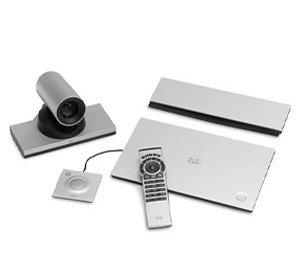
The phrase Cisco Webex equipment cost can mean very different things depending on what a buyer is actually trying to equip. It might refer to a single desk-based video-conferencing endpoint for one executive's office, a room kit for a mid-sized meeting room, a full boardroom system with multiple cameras and displays, or an underlying networking upgrade needed to support reliable video conferencing across a building. Cisco's broader portfolio also includes networking hardware and IP phones, which are sometimes bundled into the same procurement exercise when an organisation is modernising its communications infrastructure as a whole rather than buying a single conferencing device in isolation.
Because of this range, a meaningful answer to "what does Webex equipment cost" has to start with a clear picture of the rooms, the users, and the level of conferencing capability actually needed, rather than assuming a single number applies across every scenario. This guide walks through how that pricing is actually built up, how it differs between GeM catalogue purchases and direct institutional quotes, and what buyers commonly get wrong when estimating the cost of a Webex rollout.
How Webex Equipment Pricing Actually Works
The starting point for most Webex cost estimates is the room kit tier — entry-level kits designed for small huddle rooms with a handful of participants are priced very differently from higher-tier kits built for larger boardrooms with wide-angle cameras, speaker tracking, and support for a greater number of in-room participants alongside remote attendees. The choice of tier depends on room size and the typical number of people using it, and getting this specification wrong in either direction — over-specifying a small room or under-specifying a large one — is one of the more common sources of both wasted budget and poor meeting experience.
Beyond the room kit itself, displays, mounting hardware, and in some cases room-control integration (to allow one-touch meeting join or integration with a scheduling panel outside the room) add to the total cost per room. Network readiness is a less visible but often significant cost factor: reliable video conferencing requires adequate bandwidth and, in many institutional buildings, some degree of network upgrade or configuration work to ensure quality of service for video traffic, particularly in older office or government buildings where the existing network was not designed with video conferencing load in mind.
For organisations equipping many rooms at once, the number of rooms and the consistency of their specification is the largest lever on total project cost, since a rollout using a small number of standardised kit tiers across many similar rooms is considerably more efficient to price and install than a rollout where every room has a bespoke specification. Buyers who are also equipping rooms with wireless content-sharing alongside video conferencing may find the discussion in the Barco ClickShare latest price in India guide useful, since Webex room kits and ClickShare are frequently deployed together in modern hybrid meeting rooms.
GeM Catalogue Pricing vs Direct B2B Quotes
As a GeM-registered vendor, Sunlite Systems Pvt Ltd lists Cisco Webex equipment on the GeM portal, and for government departments and PSUs needing a small, well-defined number of standard room kits, the GeM catalogue price is typically the fastest and most transparent path to a purchase order. This works cleanly when the requirement is a straightforward, standard-tier installation without significant network upgrade work or custom integration.
Larger or more complex projects — equipping many rooms across a campus, integrating Webex with an existing room-control or scheduling system, or bundling a network readiness assessment into the same procurement — are generally better handled as a direct B2B quote, because the resulting bill of materials spans equipment, network work, and installation labour in a way that a single-item GeM listing cannot represent. Institutional buyers running a formal tender can still route the final purchase order through GeM, but the underlying pricing exercise for a complex, multi-room deployment mirrors the direct-quote process, since the tender specification itself effectively defines a custom bill of materials.
How to Request an Accurate Quote
The most useful starting point for a Webex equipment cost enquiry is a description of the rooms to be equipped — how many, their approximate size and typical participant count, and whether any of them already have displays, cameras, or network infrastructure that can be reused. Stating whether any rooms have unusual requirements, such as very large boardrooms, auditoriums needing hybrid-event capability, or rooms requiring integration with an existing room-control system, allows a vendor to separate standard rooms from ones that need a more bespoke specification.
It is also worth flagging network conditions upfront, particularly in older buildings or government facilities where bandwidth or network configuration might need attention before a reliable video-conferencing rollout can proceed, since this can be a meaningful cost and timeline factor that is easy to overlook if only the room-kit hardware is discussed. Buyers equipping rooms with room-control automation alongside Webex may also want to review the guide on the Crestron automation system price list, since the two are frequently specified together for more advanced boardroom deployments.
What to Have Ready Before Requesting Pricing
A short list of details, prepared before the first enquiry, consistently produces a faster and more accurate Webex equipment estimate. Buyers should be ready to describe the number and approximate size of rooms to be equipped, whether displays and network infrastructure already exist in those rooms, whether any rooms need advanced features such as hybrid-event support or room-control integration, and whether network readiness needs to be assessed as part of the project.
- Number of rooms to be equipped and their approximate size or typical participant count
- Existing display, camera, or network infrastructure that can potentially be reused
- Any rooms needing advanced features — larger boardrooms, hybrid-event capability, or room-control integration
- Whether network bandwidth or configuration needs to be assessed as part of the rollout
- Procurement route — GeM catalogue purchase, GeM tender, or direct institutional order
Even approximate answers to these points allow a vendor to produce a workable first-pass estimate, separating standard rooms from ones needing a more bespoke specification, ahead of a firm quote following a technical review or site visit.
Common Pricing Mistakes and Misunderstandings
The most frequent mistake is assuming that the room-kit hardware price alone represents the full cost of equipping a room, when displays, mounting, network readiness work, and installation labour often add a comparable share to the total, especially in rooms without existing infrastructure. A related misunderstanding is assuming a single room-kit tier is appropriate for every room in a building regardless of size, when in fact using an entry-level kit in a large boardroom typically produces a poor meeting experience, while over-specifying a small huddle room with a high-tier kit wastes budget that could be better allocated elsewhere in the rollout.
Buyers also commonly underestimate the cost and time impact of network readiness in older buildings, assuming that any existing internet connection is automatically sufficient for reliable video conferencing across many simultaneous rooms, which can lead to unexpected additional cost once a network assessment reveals the need for upgrades. Another frequent error is comparing a bare hardware quote from one vendor against an installed, network-assessed, and commissioned quote from another, and concluding the first is cheaper without recognising the difference in scope between the two.
Sector-Specific Cost Considerations
Corporate buyers typically need a mix of small huddle-room kits and a smaller number of larger boardroom kits, and the main cost driver is usually the total number of rooms rather than unusual technical complexity, making standardised, phased rollouts common in this sector. Government departments often have stricter network security and procurement documentation requirements, which can extend the technical review and approval process even when the room count and kit tiers are broadly similar to a comparable corporate deployment, and network readiness assessments tend to be more involved in older government buildings.
Educational institutions increasingly need Webex-style conferencing for hybrid learning and remote guest lectures, which pushes some rooms toward higher-tier kits with wider camera coverage suited to lecture-hall-style seating rather than a standard small-team boardroom configuration. Healthcare organisations using video conferencing for telemedicine or multi-site clinical coordination tend to prioritise reliability and simple, consistent room-kit specifications across locations over more advanced features, keeping their rollouts closer to a standardised corporate-style deployment.
GeM and Institutional Pricing in Practice
For government tenders involving Cisco Webex equipment, the specification document defines the effective bill of materials, so a tender that clearly separates standard rooms from rooms needing advanced capability or network readiness work allows the resulting GeM bid to reflect the real project scope rather than a flattened, single-tier assumption. Institutional buyers drafting such tenders benefit from involving an experienced vendor at the specification stage, since an overly generic description of "video conferencing equipment for X rooms" can produce widely varying bids simply because different vendors fill in the missing detail differently.
Buyers outside the formal tender process typically have more flexibility to refine the room-by-room specification iteratively with the vendor before finalising an order, which tends to produce a more accurate final cost because adjustments can be made after a walkthrough of representative rooms rather than being fixed in a written specification at the outset.

Frequently Asked Questions
Is there a single fixed cost for Cisco Webex room equipment?
No — cost depends on the room-kit tier chosen for each room, existing infrastructure that can be reused, and whether network readiness work or advanced integration is needed, so an accurate cost requires describing the actual rooms and use case involved.
What is the biggest hidden cost buyers overlook?
Network readiness is the most commonly overlooked cost factor, since reliable video conferencing depends on adequate bandwidth and configuration, which older buildings or networks not originally designed for video load may need upgraded before rollout.
Does equipping many rooms at once reduce the overall cost?
Standardising on a small number of kit tiers across many similar rooms generally improves pricing and installation efficiency compared with treating every room as a bespoke, one-off specification.
Is GeM catalogue pricing suitable for a large multi-room Webex rollout?
GeM catalogue pricing works well for simple, standard purchases, but a large or complex multi-room rollout involving network readiness or custom integration is usually better priced as a direct quote, even if the resulting order is processed through GeM.
How much information should I provide to get a useful first estimate?
Room count, approximate size, existing infrastructure, and any advanced feature or network requirements are generally enough for a workable first-pass estimate, which is then refined into a firm quote after a more detailed review.
Closing Summary
Understanding Cisco Webex equipment cost starts with recognising that it is not a single number but the sum of room-kit tier, existing infrastructure, network readiness, and installation work across however many rooms are being equipped. Buyers who describe their rooms and use cases clearly, and who understand when GeM catalogue pricing applies versus when a direct, designed quote is more appropriate, consistently arrive at more accurate and reliable cost estimates. Sunlite Systems Pvt Ltd supplies Cisco Webex equipment through GeM tenders, direct institutional sales, and the Sunlite Systems Online Store, and operates more broadly as Sunlite Systems India for buyers researching the wider company profile. Buyers also assessing an audio-DSP layer for their conferencing rooms may find the guide on bulk pricing for Biamp audio DSPs useful, while procurement teams sourcing across multiple categories sometimes also browse our Rudraksh India store as part of a broader institutional buying exercise.
Planning the Full Cost of Webex Ownership
Evaluating Cisco Webex equipment cost purely as a hardware line item misses how this category is priced. Webex room kits combine physical hardware with ongoing software subscriptions, and both need to be budgeted together.
The subscription side is often the larger figure over a multi-year horizon once several rooms are involved — device and collaboration licensing is billed on an ongoing basis and needs renewal for continued cloud services and support.
Networking and IP telephony integration is a third cost area — bandwidth, QoS, and network readiness across rooms should be scoped as part of the same project. Support and maintenance cover is the final piece.
A Cost Scenario for Educational Institutions
Educational institutions present a cost pattern distinct from corporate deployments, spanning classrooms needing basic conferencing, training rooms needing higher-quality kits, and administrative rooms closer to a corporate boardroom. Segmenting rooms into profiles early avoids a single misleading per-room cost figure.
Is the Webex subscription cost the same regardless of room size?
No. Licensing is generally tied to the device or room tier, and this should be itemised per room type in a quotation.
Can existing IP phones or networking hardware be reused to reduce Webex deployment cost?
In some cases yes, assessed site by site based on existing hardware's compatibility and age.
Explore More — Sunlite Systems Network
Ready for a Cisco Quote?
Sunlite Systems Pvt Ltd is a GeM-registered, authorized Cisco channel partner across India.
Contact Us Now