 Sunlite Systems Pvt. Ltd.




Netgear ProAV Switch Suppliers: The Network Layer Behind Every AV-over-IP System
Understanding the Netgear ProAV Switch Category
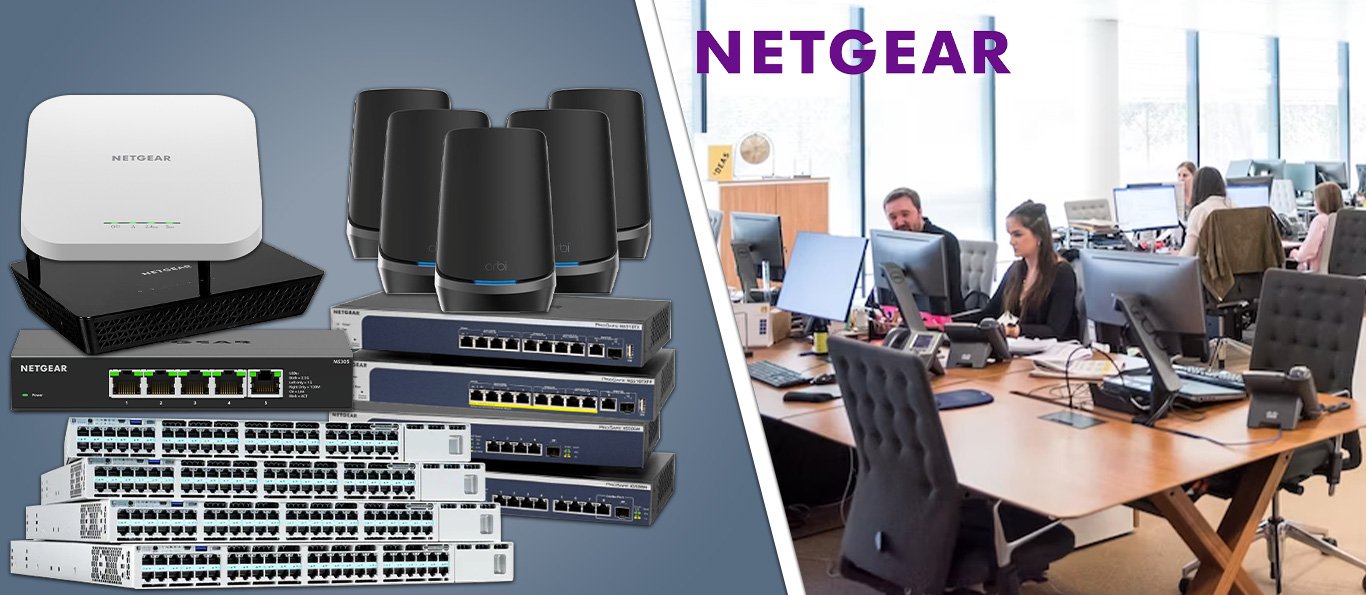
Every modern AV-over-IP installation — a video wall pulling from multiple sources, a campus-wide signage fleet, a multi-camera broadcast setup, or a large conferencing deployment spanning many rooms — depends on a network layer that most people never see and almost never think about until it fails. That network layer is the switch, and it is precisely why institutional buyers researching Netgear ProAV switch suppliers are usually further along in a project than a first-time buyer might assume: they have already decided that AV signals will travel over standard networking infrastructure rather than dedicated point-to-point cabling, and now need the specific class of networking hardware built to carry that traffic reliably. Netgear's ProAV switch line is designed specifically for this purpose, built to handle the particular demands of AV-over-IP traffic rather than general office data traffic.
The distinction between a standard office network switch and an AV-over-IP switch is not a marketing label — it reflects genuinely different traffic patterns and reliability requirements. Office network traffic is bursty and tolerant of small delays; a slightly slow file download or a momentary lag loading a web page is barely noticed. Video and audio traffic over a network, by contrast, is continuous, latency-sensitive, and highly intolerant of dropped packets, since a dropped frame in a video wall feed or an audio glitch in a conferencing system is immediately, visibly obvious to everyone in the room. ProAV switches are engineered around this reality, with features suited to multicast video traffic, prioritization for real-time streams, and the port density and bandwidth headroom that AV-over-IP systems typically demand.
Buyers evaluating this category should understand that the switch is rarely purchased in isolation — it is almost always one component of a larger AV-over-IP system that includes encoders, decoders, a control system, and the displays or speakers at the endpoints. The switch's job is to move all of that traffic between endpoints without introducing latency, without dropping packets under load, and without letting AV traffic and general office network traffic interfere with each other if they happen to share the same physical infrastructure. Getting this component wrong undermines the reliability of everything built on top of it, no matter how good the endpoint hardware happens to be.
Redundancy and power resilience are further considerations that separate a properly planned ProAV network from an improvised one. Many institutional deployments — control rooms, hospital signage networks, manufacturing floor displays — cannot tolerate the entire AV system going dark because of a single point of failure in the network, and buyers should discuss with their supplier or integrator whether redundant switching, backup power for critical network segments, or a documented failover plan is appropriate for the specific deployment, rather than assuming a single switch is automatically sufficient simply because it meets the port-count and bandwidth specification on paper.
Port count, bandwidth capacity, and support for the specific multicast and network features that AV-over-IP protocols rely on are the practical specification questions that matter most when evaluating a ProAV switch for a given project. A buyer should always specify these against the actual AV system being deployed — the encoder and decoder manufacturer's own documentation will typically state minimum network requirements — rather than choosing a switch based on general networking experience alone, since AV-over-IP systems are considerably less forgiving of an undersized or misconfigured network than typical office IT applications.
Scalability planning also deserves early attention, since AV-over-IP deployments have a strong tendency to grow. A signage network that starts with a handful of screens in one building often expands to additional buildings within a year or two, and a switch infrastructure that was sized exactly to the original requirement, with no headroom for additional ports or bandwidth, ends up needing an early and disruptive upgrade. Buyers planning a phased rollout should discuss growth expectations with their supplier at the outset, so the initial network architecture can accommodate reasonable future expansion without a full redesign.
Who Buys ProAV Switches and Why
System integrators and AV consultants specifying full AV-over-IP installations are the most frequent direct buyers of this category, typically as part of a bill of materials for a video wall, a distributed signage network, a large conferencing deployment, or a broadcast control room. For these buyers, the switch choice is rarely negotiable once the rest of the system has been designed, since the AV manufacturer's own compatibility guidance usually points toward specific network requirements that the switch must satisfy.
Government departments and public-sector facilities building out command centers, control rooms, or campus-wide signage and communication networks are a significant institutional buyer segment, where network reliability is treated as seriously as the endpoint hardware itself, since a control-room video wall going dark because of a saturated or misconfigured network is just as much of an operational failure as a display panel breaking down. Corporate IT and facilities teams undertaking a meeting-room standardization project or a large signage rollout across a campus similarly need ProAV-grade switching to support the number of encoders, decoders, and endpoints involved.
Educational institutions building out lecture-capture systems, campus-wide digital signage, or multi-room broadcast facilities for media programs are another consistent buyer segment, often scaling their network requirements considerably as they add rooms or facilities over successive budget cycles. Healthcare facilities running hospital-wide signage and communication networks, manufacturing plants distributing production dashboards and safety information across a factory floor, and hospitality groups or auditoriums running distributed AV across multiple halls or properties round out the buyer base, and in every case the underlying requirement is the same: a network built specifically to carry demanding, latency-sensitive AV traffic without degrading over time as more devices are added.
Evaluating Genuine, Authorized ProAV Switch Suppliers
Networking hardware in general is a category where grey-market and parallel-import stock is common, and ProAV switches are no exception, particularly since the category sits at a premium above general-purpose networking equipment and therefore attracts the same sourcing shortcuts seen in other premium electronics categories. The most important protection for an institutional buyer is confirming that a supplier is an authorized channel partner who can provide a GST-compliant invoice, valid warranty registration, and a genuine support and firmware update path back to the manufacturer.
Because ProAV switches are deployed as critical infrastructure underneath an entire AV system, warranty and replacement turnaround matter considerably more here than in a typical consumer networking purchase — a failed switch in a control room or video wall system can take the entire system offline, not just a single device, and buyers should ask suppliers directly about lead time for a replacement unit and whether any advance-replacement or spare-unit arrangement is available for mission-critical deployments.
Buyers should also verify that the exact model and firmware version being quoted matches what the AV system integrator specified, since substituting a similar-looking but different switch model — even from the same manufacturer's broader networking range — can introduce compatibility or performance issues that are difficult to diagnose after installation. A genuine, knowledgeable supplier will confirm the specific model against the AV system's documented network requirements rather than treating any switch with enough ports as an acceptable substitute.
It is also worth asking a prospective supplier about their experience configuring ProAV switches specifically, as opposed to general enterprise networking, since AV-over-IP deployments often require specific configuration — VLAN segmentation, multicast settings, quality-of-service prioritization — that a purely general IT networking background may not cover in depth. A supplier who can speak specifically to these configuration requirements, rather than only to the hardware specification sheet, is a considerably safer choice for a project where the network is genuinely critical infrastructure.
Buyers should also ask how firmware updates are handled over the life of the deployment, since networking equipment generally receives periodic firmware updates that address performance, security, and compatibility issues. A supplier or integrator who can commit to monitoring and applying relevant firmware updates as part of an ongoing support arrangement is offering meaningfully more value than one who treats the sale as a one-time transaction, particularly for a network segment carrying business-critical or citizen-facing AV traffic day after day.
Sector-Specific Use Cases
Government command centers and control rooms rely on ProAV-grade switching to support large video wall systems, multi-source monitoring displays, and often multicast video feeds from many camera or data sources simultaneously, where network reliability is treated as a core operational requirement rather than an IT afterthought. Public-sector campus deployments similarly depend on this category of switching to support signage networks spanning many buildings or floors from a centralized content management system.
Corporate campuses use ProAV switching to underpin meeting-room standardization projects, lobby video walls, and internal broadcast or town-hall systems that need to distribute video reliably across many rooms or floors simultaneously. Educational institutions use the same category of hardware for lecture-capture systems, campus signage networks, and media-program broadcast facilities, often scaling the network incrementally as additional buildings or rooms are added to the system over time.
Retail chains distributing promotional and merchandising content to multiple store locations from a centralized content system similarly depend on reliable network switching at each store, since a store's signage network is only as dependable as the switch infrastructure carrying content to every screen on the premises. As more retail chains centralize content management across dozens or hundreds of locations, the underlying network layer becomes an increasingly important part of the overall system reliability rather than an incidental detail.
Healthcare facilities running hospital-wide digital signage, department directories, and increasingly telemedicine or clinical video systems depend on ProAV switching to keep this traffic reliable across a facility that may span multiple buildings or floors, where network downtime affecting a wayfinding or OPD queue display has a direct, visible impact on patient experience. Manufacturing plants distributing production dashboards, safety notices, and shift information across a factory floor via networked signage rely on the same category of hardware, often in environments where the network also needs to tolerate the electrical noise and physical conditions typical of an industrial floor.
Hospitality groups and auditoriums running distributed AV across multiple halls, ballrooms, or properties represent the remaining core use case, where a single event may need to distribute video and audio to several spaces simultaneously, and where a network hiccup during a live event is immediately and visibly disruptive to guests or attendees. Across all of these sectors, the switch is rarely the most visible piece of hardware in the room, but it is consistently one of the most consequential when it comes to whether the visible hardware — the displays, the cameras, the speakers — actually performs reliably day after day.
The Buying Process, Step by Step
The first step is establishing the network requirements directly from the AV system being deployed — the encoder and decoder manufacturer's documentation, the number of endpoints, expected bandwidth per stream, and any multicast or VLAN requirements — rather than treating switch selection as a generic networking decision separate from the AV system it supports. This information should come from whoever is specifying the overall AV-over-IP system, whether that is an in-house AV team or an external system integrator.
The second step is engaging a supplier who can confirm not just that the switch model matches these requirements on paper, but that it has been configured correctly for the specific AV protocols and multicast behavior the system requires. This is also the point at which buyers should clarify installation and configuration scope — whether the supplier will handle VLAN and multicast configuration directly, or whether this responsibility sits with a separate IT team or system integrator, since a misconfigured switch can perform poorly even when the hardware itself is entirely correct for the application.
The final step covers standard commercial process: formal quotation against a purchase order, GST-compliant invoicing, delivery timelines, and clarity on warranty terms and replacement turnaround for what is effectively critical infrastructure. Institutional buyers should insist on this being documented in writing before payment, and for larger or mission-critical deployments, it is worth discussing spare-unit availability or an advance-replacement arrangement explicitly at this stage rather than discovering the standard turnaround time only after a failure has already taken part of the system offline.
It is also good practice to schedule a proper load test once the network is installed and before the AV system is declared fully live — running the full complement of endpoints simultaneously under realistic conditions to confirm the switch infrastructure holds up under actual, rather than theoretical, load. Issues that only appear when every endpoint is active at once are far easier to catch and correct during this dedicated test window than after the system has already been handed over to daily operational use.

The GeM and Institutional Procurement Angle
Government departments and public-sector undertakings building out AV-over-IP infrastructure — command centers, campus signage networks, hospital communication systems — generally procure the underlying networking hardware through the Government e-Marketplace alongside the rest of the AV system, in line with standard public procurement policy for IT and AV equipment. Working with a GeM-registered vendor gives these buyers a documented, auditable procurement trail for what is genuinely critical infrastructure, considerably simplifying the internal approvals such a purchase typically requires.
Sunlite Systems Pvt Ltd operates as a GeM-registered vendor, allowing government offices, public-sector undertakings, and other institutional buyers to route ProAV switch purchases through the standard GeM tender or direct-order process rather than through an off-platform vendor relationship. This matters particularly for larger AV-over-IP projects where the networking component of the bill of materials needs to satisfy the same procurement compliance requirements as the rest of the system.
Corporate and institutional buyers outside the strict government procurement category — larger companies, hospital groups, and educational institutions with their own procurement policies — often still value the GeM-registered status as an independent signal of vendor legitimacy for a considered infrastructure purchase, since it indicates the vendor has already been through a formal registration and vetting process rather than operating purely on an informal basis.
Frequently Asked Questions
Why can't a standard office network switch be used for an AV-over-IP installation?
Standard office switches are built for bursty, delay-tolerant data traffic, while AV-over-IP traffic is continuous and highly sensitive to latency and dropped packets, so a switch without the multicast handling, prioritization, and bandwidth headroom that ProAV switches are built for can cause visible video glitches, audio dropouts, or lag under real-world load, especially as more endpoints are added over time.
How many ProAV switches does a typical installation need?
This depends entirely on the number of endpoints, the bandwidth per stream, and whether the deployment spans a single room or multiple buildings, so the correct answer should come from whoever is specifying the AV-over-IP system rather than being assumed from the size of the space alone, and should include reasonable headroom for future expansion.
Can a ProAV switch be shared with general office network traffic?
It is technically possible with proper VLAN segmentation and quality-of-service configuration, but many institutional deployments prefer to keep AV traffic on a dedicated network segment to avoid any risk of office traffic degrading real-time AV performance, particularly for mission-critical control rooms or broadcast systems.
What should a buyer ask a ProAV switch supplier before finalizing an order?
Ask for confirmation of authorized dealer status and a GST-compliant invoice, clarity on warranty terms and replacement turnaround, and whether the supplier has direct experience configuring the specific multicast and VLAN settings the AV system requires, rather than only supplying the hardware itself.
Can government departments procure ProAV switches through GeM?
Yes — Sunlite Systems Pvt Ltd is a GeM-registered vendor, allowing government offices and public-sector undertakings to route ProAV switch and broader AV-over-IP infrastructure purchases through the standard GeM tender or direct-order process.
Closing Summary
Finding reliable Netgear ProAV switch suppliers is ultimately about recognizing that the network underneath an AV-over-IP system is just as critical to its performance as the displays, cameras, or speakers everyone actually notices. Government command centers, corporates, schools, hospitals, manufacturers, and hospitality and auditorium venues all depend on this category of switching to keep demanding video and audio traffic reliable across every endpoint in the system, and sourcing it from a genuinely authorized, technically capable supplier is just as important as sourcing the visible hardware correctly.
Sunlite Systems Pvt Ltd, headquartered in Ghaziabad, Uttar Pradesh, supports institutional and business buyers across these sectors as a GeM-registered vendor, covering both government tender routes and direct B2B sourcing. For related AV procurement reading, see our articles on the Logitech Rally Bar video conferencing dealer and Optoma high brightness projector lines, learn more at Sunlite Systems Pvt Ltd or Sunlite Systems India, browse hardware directly on the Sunlite Systems Online Store, or explore related electronics through our Rudraksh India store. For procurement queries, reach the Sunlite Systems team directly through the contact page.
Explore More — Sunlite Systems Network
Ready to Buy Netgear Equipment?
Sunlite Systems Pvt Ltd is a GeM-registered, authorized Netgear channel partner across India.
Contact Us Now