 Sunlite Systems Pvt. Ltd.




Bulk Pricing for Peoplelink Interactive Displays and Video Conferencing Systems: A Buyer's Guide
Why Peoplelink Pricing Is Never a Single Number
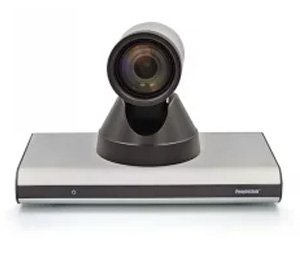
Anyone who has tried to get a straight answer on video conferencing equipment costs has run into the same wall: there is no single published price that applies to every buyer, every room, and every quantity. Peoplelink builds a wide portfolio spanning webcams, dedicated VC endpoints, and interactive display and conferencing units meant for huddle rooms, boardrooms, and training halls, and each of those categories is priced on a different basis. A single webcam for a small office and a fully integrated conferencing setup for a 40-seat auditorium are not comparable purchases, even though both fall under the same brand name. This is precisely why institutional buyers — government departments, corporate IT teams, school administrators — need to understand the mechanics of pricing before they ask for a number, rather than after.
Sunlite Systems Pvt Ltd works with Peoplelink as part of a broader video conferencing and unified communications portfolio, supplying through GeM tenders, direct institutional purchase orders, and retail-level orders through Sunlite Systems Online Store. Because we quote across all three channels regularly, we see firsthand how the same underlying hardware can carry different final costs depending on how the order is structured, what documentation is involved, and what volume is being committed to. This article walks through that mechanism in detail.
How Peoplelink Pricing Is Actually Built
Video conferencing pricing is spec-driven, not brand-driven. Two Peoplelink endpoints with the same model family name can carry different costs depending on camera resolution and field of view, microphone pickup range, whether the unit includes an integrated speaker or requires an external sound bar, and whether it is being sold as a standalone webcam-class device or as a full room kit with mounting hardware, cabling, and a control interface. Software licensing is a second layer entirely separate from hardware — cloud-based meeting licenses, device management dashboards, and firmware update entitlements are often quoted per-seat or per-endpoint annually, and they are frequently left out of a buyer's mental math until the final invoice arrives.
Warranty terms are a third variable that buyers routinely underestimate. Standard manufacturer warranty differs from extended on-site warranty, and institutional buyers — particularly in government and education — often require on-site replacement guarantees rather than carry-in service, which changes the underlying cost basis of the quote. Installation and integration services, including cabling, mounting, room acoustics treatment, and network configuration, are commonly quoted as a separate line item rather than bundled into hardware cost, and whether that line item is included or excluded materially changes what number a buyer sees first.
Finally, logistics and regional delivery matter more than most buyers expect. A quote destined for a single Delhi-NCR office is priced differently from a quote covering simultaneous delivery to twelve district offices spread across a state, purely because freight, installation-team travel, and staggered delivery scheduling add real cost that has nothing to do with the hardware itself.
GeM Catalogue Pricing vs Direct B2B Quotes
Government e-Marketplace (GeM) catalogue listings and direct B2B quotations are two genuinely different pricing mechanisms, and conflating them is one of the most common sources of confusion we encounter. GeM catalogue prices are listed by the OEM or its authorized resellers against specific product codes, and government buyers procure against those listings following GeM's tender or direct-order rules, including L1 (lowest-price) evaluation where applicable. The catalogue price is a ceiling reference point tied to a specific configuration; it is not automatically the price a buyer will pay once quantity, delivery location, and value-added services enter the picture.
Direct B2B and institutional quotes, by contrast, are negotiated against the buyer's actual requirement document — a specific room count, a specific timeline, a specific combination of hardware and services. This is where Bulk pricing for Peoplelink interactive displays genuinely becomes a distinct pricing conversation from a single-unit purchase, because volume commitments open room for tiered discounting, consolidated freight, and phased delivery schedules that a GeM catalogue line item simply does not express. A corporate buyer fitting out fifteen meeting rooms across two campuses is not shopping the same price mechanism as a school buying one classroom conferencing unit.
The practical implication for buyers is this: if you are a government entity bound by GeM procurement rules, your first reference point should be the GeM catalogue and any active tender for the relevant category. If you are a corporate, school, healthcare, or hospitality buyer procuring outside GeM, a direct quotation tailored to your room count and specification sheet will almost always be more precise — and often more competitive — than trying to reverse-engineer a number from a public listing designed for a different procurement mechanism.
What Actually Changes the Final Number
Quantity is the most obvious lever, but it is not the only one, and it is not even always the strongest one. Order volume typically unlocks tiered discounting because it reduces per-unit freight, handling, and after-sales support overhead for the supplier — but volume only helps if the specification is locked before the quote is requested. A buyer who asks for pricing on "20 conferencing units" without specifying resolution tier, mount type, or software licensing will receive either an unusably wide price range or a quote based on assumptions that may not match what they actually need.
Configuration complexity is the second major lever. A webcam-only order is priced on hardware alone; a full room-kit order that bundles a display, camera, microphone array, and control processor is priced as an integrated system where the sum is genuinely different from adding up individual component list prices, because integration testing and compatibility validation are part of what is being paid for. Delivery timeline is a third factor that is easy to overlook — a rush order compressed into days rather than weeks can carry expedited logistics costs, while a phased rollout across a financial quarter can often be priced more favorably because it lets the supplier plan procurement and staffing in advance.
Service-level commitments round out the list of major cost drivers. On-site installation versus self-installation, extended versus standard warranty, and whether annual maintenance contracts (AMC) are bundled into the initial order or negotiated separately, all shift the final number independent of the hardware specification itself. Buyers who treat these as afterthoughts rather than as quote inputs are the ones most likely to receive a revised, higher quote after their initial number has already been budgeted internally.
What to Have Ready Before You Ask for a Quote
The single most effective thing a buyer can do to get an accurate, fast quotation is to arrive with a room-by-room requirement list rather than a vague headcount. This means specifying, for each room or location: approximate room size and seating capacity, existing AV infrastructure (is there already a display, or does one need to be supplied), network readiness (dedicated bandwidth for VC traffic or shared office network), and whether the room requires a fixed installation or a portable/mobile unit.
Second, buyers should clarify their procurement channel upfront — GeM tender, direct purchase order, or informal budgetary estimate for internal approval — because this changes which pricing mechanism applies and what documentation the supplier needs to prepare in return. A budgetary estimate for board approval can be turned around faster and with fewer formal conditions than a binding GeM-compliant quotation, and telling the supplier which one you need saves both sides a round of back-and-forth.
Third, have your timeline and delivery locations finalized, even approximately. "Sometime this quarter" versus "hard deadline in three weeks" are different quoting exercises, and multi-location delivery needs to be itemized by address (or at least by city/state) so freight and installation-team logistics can be estimated honestly rather than guessed at. Buyers who bring this level of detail to the first conversation routinely receive their final, actionable quote in one or two rounds rather than five.
Common Pricing Mistakes Buyers Make
The most frequent mistake is comparing a hardware-only quote from one supplier against a bundled hardware-plus-installation-plus-AMC quote from another, and concluding that the second supplier is more expensive. Line-by-line comparison of what is actually included is the only fair way to evaluate two quotes, and buyers who skip this step routinely make procurement decisions based on numbers that are not actually comparable.
A second common error is requesting pricing before finalizing specifications, then expecting the eventual invoice to match the early ballpark figure exactly. Early budgetary numbers are, by design, based on assumptions; once room count, configuration tier, and service levels are locked, the number can and often does move, and that is not a sign of bad-faith quoting, it is a sign that the requirement was refined.
A third mistake, particularly common among first-time institutional buyers, is treating GeM catalogue price as a fixed retail price that should match what a direct-quote buyer pays for the identical configuration. Because GeM pricing and direct B2B pricing follow different mechanisms — different service inclusions, different order-quantity assumptions, different documentation overhead — a mismatch between the two is normal and does not indicate an error on either side.
Sector Spotlight: Government Offices and Training Centres
Government departments and public training institutions represent one of the steadiest demand segments for Peoplelink conferencing and interactive display equipment, largely because hybrid meetings between district offices, state headquarters, and central ministries have become routine rather than exceptional. Pricing conversations in this sector are shaped heavily by GeM procurement rules, budget-cycle timing tied to the financial year, and a strong preference for on-site warranty and local support over the cheapest possible unit cost, since downtime in a government conferencing room has administrative consequences beyond the room itself.
Training centres attached to government departments add a second layer of consideration: interactive display units used for classroom-style instruction need to survive heavier daily use than a boardroom unit that might see a few hours of meetings per week, which is a legitimate factor in specifying a more robust configuration tier even if it raises the per-unit cost. Buyers in this sector who bring us their annual training-hall refresh plans well ahead of the fiscal year-end typically get better-planned, better-priced outcomes than those who approach us during a compressed year-end spending window.
GeM and Institutional Buying Considerations
For government buyers specifically, GeM registration status matters as much as the product specification. Sunlite Systems Pvt Ltd is a GeM-registered vendor, which means our Peoplelink catalogue listings and tender responses are structured to meet GeM's documentation and compliance requirements directly, rather than requiring a buyer to reconcile a generic B2B quote against GeM's format after the fact. This matters in practice because GeM tenders often specify evaluation criteria beyond raw price — delivery timeline, after-sales service commitments, and technical compliance to the tender's specification sheet all factor into the final award, not price alone.
Institutional buyers outside strict GeM procurement — corporate facilities teams, private schools, hospital administration — have more flexibility in how they structure their purchase, but they benefit from the same discipline: a clear specification, a defined timeline, and an explicit ask about what's included in the quoted number. If you're evaluating a comparable video conferencing brand alongside Peoplelink for a large rollout, our companion article on Polycom video conferencing price lists covers the same mechanics from a different manufacturer's perspective, which is useful for buyers running a multi-brand comparison before finalizing a tender specification.
Frequently Asked Questions
Does Peoplelink publish a fixed retail price list?
Peoplelink, like most enterprise AV and conferencing brands, does not publish a single universal retail price list because configuration, licensing, and service inclusions vary by deployment. GeM catalogue entries exist for specific SKUs, but the final number a buyer pays depends on quantity, configuration, and the services bundled into the order, which is why a direct quotation request remains the most reliable way to get an accurate figure.
How much does order quantity actually reduce the price?
The discount unlocked by volume depends on how tightly the specification is locked and how the order is phased. A ten-unit order with a fixed, unchanging specification and a single delivery date will typically see better tiered pricing than the same ten units ordered in small, staggered batches with specification changes along the way, because the latter adds administrative and logistics overhead that offsets the volume benefit.
Can we get a budgetary quote before finalizing our exact room count?
Yes — a budgetary estimate based on an approximate room count and a representative configuration is a normal first step, particularly for internal budget approval. It should be understood as a planning figure rather than a final invoice number, and buyers should expect it to be refined once exact room-by-room specifications are locked.
Is GeM catalogue price always lower than a direct quote?
Not necessarily. GeM pricing reflects a specific procurement mechanism with its own service-inclusion assumptions, while a direct quote is built against your actual requirement, including any volume, timeline, or bundled-service factors that GeM's catalogue listing does not capture. Neither route is inherently cheaper; the right one depends on your procurement channel and requirement.
What information speeds up getting an accurate Peoplelink quote from Sunlite?
A room-by-room requirement list, your procurement channel (GeM, direct PO, or budgetary estimate), your delivery timeline and locations, and whether installation and AMC should be bundled into the quote are the four pieces of information that most reduce the number of quote revisions needed before a final, actionable number is issued.
Closing Summary
Peoplelink pricing for interactive display and video conferencing hardware is a function of specification, quantity, service inclusions, and procurement channel — not a single catalogue number that applies uniformly across every buyer. Government and institutional buyers working through GeM should treat catalogue listings as a compliance and reference baseline, while corporate, school, healthcare, and hospitality buyers procuring directly will generally get a more precise and often more favorable outcome from a tailored quotation built against their actual room-by-room requirement. As a GeM-registered vendor with direct B2B quoting experience across both channels, Sunlite Systems Pvt Ltd — reachable through our main site at Sunlite Systems Pvt Ltd and regionally at Sunlite Systems India — is positioned to walk buyers through whichever mechanism applies to their purchase. Buyers evaluating headset and endpoint needs alongside displays may also find it useful to review our companion piece on Viewsonic interactive flat panel bulk pricing before finalizing a mixed-brand tender specification, and those sourcing consumer-facing AV accessories separately can browse our Rudraksh India store for adjacent product categories. The fastest route to a usable number remains the same regardless of sector: lock your specification, state your procurement channel, and ask explicitly what is and isn't included in the figure you receive.
A Step-by-Step Checklist for Requesting Accurate Bulk Pricing
For bulk pricing for Peoplelink interactive displays, confirm exact panel size mix, decide OPS module vs. external PC per room, list installation locations by access difficulty, state total unit count and delivery schedule, clarify network setup ownership, ask about annotation software licensing, and request per-unit warranty terms in writing.
Total Cost of Ownership for a Bulk Rollout
Mounting hardware, installation labour (scaling with site complexity), device-management software subscriptions, extended warranty, spare-panel stock, and staff training all sit outside the headline per-unit number but shape the real budget.
Does the quoted price change if we order displays in phases rather than all at once?
Yes — a single bulk order shipped together usually secures better pricing than the same quantity split across smaller purchase orders over months.
Is the price different for a classroom deployment versus a boardroom deployment?
The panel may be identical, but boardrooms often need video-conferencing integration and higher-grade mounting, changing the accessory bundle.
Explore More — Sunlite Systems Network
Ready for a Peoplelink Quote?
Sunlite Systems Pvt Ltd is a GeM-registered, authorized Peoplelink channel partner across India.
Contact Us Now